Sunday, November 29, 2020

Brightening bleak mid-Winter


In truth, it's not quite mid-Winter, but with only three weeks to go until the shortest day here in the Northern hemisphere, it has begun to feel a bit bleak. Not only has Covid done a dirty on family gatherings, but the weather itself has descended into that grey nothingness that so often characterises December (and is only alleviated by fires, mulled wine and the occasional magnificently fierce frosty day)

There are, of course, ups to the season of dormancy. Bare root trees and shrubs can be bought for a fraction of the price of their potted warm weather cousins. I have acquired two cherry trees and two June berries (amelanchier lamarckii). I read about the latter in an article and am really excited to see what happens in the Spring. While my specimens are quite small and twiggy, I am promised a show of white flowers and berries which are like blue berries. It makes the wait for Spring all the more exciting - watch this space!

Bare-root acquisitions are one way to make this time of the year interesting, but there are other ways too, which, while they require some shopping, do more than supermarket offerings to warm the cockles of our hearts. As many of you will know, I am no fan of the festive season. I dislike the rampant consumerism that characterises a UK Christmas and have forged a reputation as a Grinch. But I also have children and, as my Christmas-loving husband keeps reminding me, I shouldn't `spoil it for them' - or him, I suspect. And, while my Grinch-ish nature is inclined to call it ` a dose of reality', the mum in me acknowledges his point. And so, following on the traditions of Grandma Whyman who used to make our Christmas cake and my friend Margaret, who makes preserves as gifts, over the last several years we have begun our own `making' traditions.  

The first of these is making gingerbread biscuits. We began this `tradition' while living in Mozambique. Unable to find chocolate baubles to hang on the tree (too hot), we decided to make gingerbread decorations to hang instead. It was such fun, that the tradition has stuck. So now we get together to bake and decorate gingerbread on one of the first weekends of December. We make a huge batch and take some round to the neighbours. My middle daughter is now living in Wales, but she assures me that she will also be making gingerbread this year. (I have to be honest, there is a fair amount of gingerbread eating that goes on - not a lot lands up on the tree any more).

The second `tradition' is a new one. Last year, we were lucky enough to be invited along to a wreath making session with a bunch of friends. My youngest daughter and I each made a wreath, and enjoyed it so much, that we decided to do it again this year. 

Our 2019 wreaths were moss based and this year we wanted to make wreaths for friends and family, but the Grinch in me baulked at the idea of all those wire frames which would, inevitably, end up chucked out. (Besides, they would be heavy to post). Inspiration struck while cutting back the Virginia Creeper: it occurred to me that the vines were pliable enough to weave. So I did - making the bases for several wreaths quite easily. This last week, my daughters (eldest and youngest) and I transformed them from woody rounds to festive decorations. I am lucky to have a huge rosemary bush and so we used rosemary sprigs as the basic greenery, attached with easily available floristry wire. My eldest daughter visited Wilko (eek! - but she enjoys the shops at this time of the year) and came back with a trove of wreath decorations, from the natural (pinecones with twine attachments) to the tacky (plastic berries and frosted apples).  
(As an aside: as all the tat - and the pinecones - are reusable, I have to admit that I don't mind it too much.)


There is actually a lot of natural decoration out there. I scoured my rose bushes for rosehips (make sure they haven't gone mushy) and raided the edges of the playing field for berries. Left-over ribbon also comes in handy. And - tarra! We made wreaths which we packaged in recycled cardboard boxes and sent off to Wales, Kent , Hertfordshire and a different spot of Essex!

For our own wreaths, we re-used the moss wreaths from last year. just soaking the moss in water to rejuvenate it. Berried ivy is plentiful along most country lanes, but we actually have our own in the garden, and this formed the basic `greenery' of the wreaths. We recycled many of the decorations from last year and I risked life and limb to gather as many rosehips as possible to add the required red ( I really did - still picking thorns out!) We (my youngest daughter and I ) are really quite pleased with the results and the grey of almost-December seems a little less bleak.

Next stop: hauling out the tree and making gingerbread. But that can all wait a week or two. This grinch needs festive cheer in small doses...


PS: if you want a more comprehensive guide, and loads of ideas, to making your own wreath, have a look at this page:

How to make a Christmas wreath - Gardens Illustrated


Friday, November 13, 2020

Beware - the Grinch cometh!


So here we are: mid-November and Kevin the Carrot* has made his grand entrance (with, I have to admit, a very cute hedgehog). The latest lockdown has meant that the Christmas hype has started VERY early. Which has got me started - very early.

If you love Christmas, look away now. No, seriously, you have been warned.

I loathe Christmas and all the Christmas hype on telly is starting to push me over the edge (really, M&S? Gin with gold bits? What if they get stuck in your throat? And what nutritional value could they possibly have? I'm pretty sure you can't taste them!)

Urgh. Christmas.

Don't get me wrong. I have nothing against the religious ceremony. In fact, I love midnight mass, having had the privilege of first attending in Nazareth as a Rotary exchange student many years ago. My church attendance has flagged over the years, but the spiritual part of Christmas (or mid-Winter) is not on my loathing list. Nor is the `goodwill to mankind', which really should be part of our everyday living. 

What is on my Loathe List is the excess that surrounds this holiday. I have lived in four countries and can honestly say that the UK tops the other three, by a mile, in wanton, excessive capitalism when it comes to Christmas. We all know the story - hours spent trying to find parking at the local supermarket as people shop and shop and shop and shop and shop ad nauseum. This despite the shops only closing for a day (so that we can get out and shop and shop and shop and shop for New Year). On every other day, we are happy to have a meat/meat substitute, a starch and a veg. At Christmas we feel obliged to have two or three of everything. And dessert. And snacks and sides.  And so much gets thrown away. I get it, I do: its that  mid-Winter thing of celebrating that we've made it through the dark days of December (although I have to point out that there are at least two more months of dark days to come...) but really, so much? 

Aside from the food waste, there is also the tat-fest that is Christmas. We are obliged to buy each other all sorts of rubbish that most people don't really want. Every year, thousands of people spend money they don't have on `making Christmas special' and then spend the whole of the next year struggling to pay off their debts. Why? Last year, money guru, Martin Lewis urged people not to buy unnecessary gifts and definitely not to buy gifts that they can't afford. This year, more than ever, with all the uncertainty that surrounds our economy, surely it makes even more sense.

Don't get me wrong - I like presents, but I like them to mean something. When my husband's Grandma was alive, she would make us a Christmas cake each year. I loved that. The idea that she had thought of us. Made something just for us. For me, it exemplified the bonds that should be celebrated at Christmas.

My pragmatic friend, Margaret always gives us marmalade, jams and chutneys at Christmas. I love what has become a tradition. Again, she has put a bit of herself into a gift, making it something no supermarket can sell. (To be fair, she is also the queen of the garden glove and bamboo sock - but they are equally well-considered, useful gifts).

Last year, when my daughters began to ask what I wanted for Christmas (poor things, they should know better by now) I told them that I only wanted something that they had made. And they were brilliant! Daughter One made fudge and infused olive oil with garlic. Daughter Two made soap (not for the faint-hearted) and hand-painted a mug. Daughter Three (not even 11 at the time) turned the caps of my favourite bottled ale into earrings. It was wonderful!

This year, I think I will repeat myself and see what happens. I think of it as a challenge.

As for me: well, I have sloe gin and crab apple gin brewing. I have made pickle and jam and I am a bit artsy on the side... None of which my daughters want for their actual gifts. So I will compromise and get them something they otherwise would not have. I will try to make it practical and it will be wrapped in recyclable brown paper with reusable ribbon.  

While Joan Collins has this week put up her Christmas Tree, mine will go up in early December (and come down on Boxing Day) And here we will go again: the husband (a big fan of Christmas) and I will have the usual meltdown over excess versus generosity. This will result in him doing all the Christmas shopping and cooking (poor thing, you'd think he'd have learned by now) and  I will `happy face' it all through December 25th (even though everyone knows I am lying). 

I suppose you could call it a Christmas tradition...


* Kevin the Carrot is the hero of the Aldi Christmas adverts


Tuesday, October 27, 2020

Grey Days

 As I write, the rain is beating against the windows and the view is of a cold and pretty soggy world. I haven't worked up enough `go' to take the dog for a walk and he has had to do with a ball thrown across the lounge (not a brilliant idea, since I now have ball-shaped splodges on the carpet, the wall, the door...) The weather is grim and the country-wide Covid news pretty grim too. It can be tempting to be downright negative! Fortunately, there is always something fantastic out there if you stop long enough to look.

The birds, for one. Despite the rain, my garden is absolutely teeming with birds. I put food out sporadically, but my neighbour has bird feeders (with actual food!), so I suspect I might be benefiting from his collateral. While neither birds nor neighbour seem to mind that I am cashing in, I'm enjoying every moment. There are still wood pigeons about,( mostly sitting mournfully and ridiculously in the rain) but a pair of ring-necked doves have become regular visitors to the lawn. My favourites, the blackbirds are taking full advantage of the fruit-laden crab apple tree, as are the blue tits. And we seem to have a sudden surge in the population of chaffinches. Months ago, I was terrorised by an especially territorial chaffinch who took umbrage whenever he saw his own reflection (car wing mirrors, windows, sliding doors, conservatory, any window...) and threw himself against all surfaces with great gusto. My car had bags over the wing mirrors for days and I spent a large proportion of my time shooing away the feisty little bird. I can only imagine that his territorial ambitions were realised, because I now seem to have more chaffinches about than I can count. I'm not sure what they will do when the weather gets colder, since I've never had the opportunity to notice before. Anyone?


The weather has limited my garden activities (yes, I know, I'm clearly not dedicated enough) but I have decided to try winter-sown crops this year. Despite spinach being a roaring success in previous years, the slugs have stripped every plant back to a few skeletal stalks. I never actually see a slug, so I must assume that these are very particular stealth slugs. No matter - they appear to not like kale, so I have something green and leafy to pick. I also threw in the last of the lettuce seeds and now have three lettuce plants that seem to be happily avoiding slug attention. The miracle butternut (the last survivor of seeds sown from a supermarket butternut) has produced two reasonably sized fruits and I am now just waiting for them to take on butternut colouring before I harvest them. The great excitement has been the planting of onions. I put them in about two weeks ago and there are already some strong stalks peeping up from the trenches  - so cause for optimism. I have also planted leeks, although I must admit to finding leeks a bit of a challenge in the past. They do grow, but are so much slower than I imagined they would be. And then my first crop was so gritty that it barely seemed worth the effort. HOWEVER, by being a lazy gardener and not pulling them out, I discovered that they create the most gorgeous flowers, which look lovely cut, even if they do smell a little oniony. The bees also love them. So I have to admit that the leeks are there more for flowers than eating - although I suppose I will think again when they are actually eating size.

Two chilli plants, grown from seed as a father's day present in June, seem to be doing well in the greenhouse - so maybe there will be some chillies soon. I had one pepper plant in my veg patch that was looking increasing miserable, so I have dug that up and put it in a pot in the greenhouse too. It remains to be seen whether I have killed it or not.

One of the nice things about the approaching winter is that it is the season to order (and plant) bare-root trees. I have cherry ambitions this year, but have been beguiled by advertisements of dwarf fruit trees that can be grown in pots. A lemon tree looks extremely tempting, with many boasting hardiness to -5 degrees. Hmmm - decisions.

So good things to look forward too, even if it is wet and cold.

Talking of good things: one of the positive outcomes of this really strange year is the way that so many communities have come together. I have to admit to not really being a community type. Although I have nothing against participation, I've never really felt inclined to join in, but this year has made me re-evaluate. In my rather small village, I have to give a shout-out to the pub. The Fox has emerged as the hub of our community. In the worst days of lockdown, The Fox took the initiative to open a community shop and has continued to offer online pub-quizzes, takeaways and, more lately, the ability to get out in a safe and regulated environment. In short - somewhere for locals (just family bubbles at the moment) to feel some sense of normality. They are even the initiative behind the socially distanced `pumpkin trail' planned for Halloween this year. 

I am sure that there are pubs, coffee shops and restaurants all over the country (and the world) that have become as important to their communities in ways that we didn't really appreciate before now. I know that right now, here in the UK, the hospitality industry is rising to the challenge of providing low income children with meals over the holidays. I take my hat off to every single establishment which, like the Fox, has held their community together over the last months.

Am I still a solo player? Well, I hope I am on my way to becoming more useful. I attended my local council meeting this month and hope to do so again. Not only could I air my own concerns, but it was good to see what is happening in my community over all. I appreciate that I live in a small rural environment, but I really think that everyone should do the same (at least every now and again). We all want a better world. I think we might need to participate more in the moulding of our communities if this better world is to be achieved.

So how's that for a cold and wet morning? Birds, veg and a soap box too!

And pumpkins!


( As an aside: we got our pumpkins from Hatter's Farm in Takely. They have a pumpkin cannon - fabulous fun!)

Stay safe, everyone!

Saturday, October 10, 2020

Green tomatoes and red leaves

 A few days ago, I sent my daughter out to pick all the remaining green tomatoes. The season has ended quite abruptly and it was clear that no more would ripen. I watched her for a while. She stood carefully in the muddy veggie patch and tentatively picked a couple in full view. Irked, I joined her and picked all the ones that drooped on dropped stems and hid behind leaves.

`If we lived 200 hundred years ago, we'd be reliant on every tomato we could pick!' I preached.

My daughter picked another tomato. `We would definitely survive,' she said, in a blatant attempt to make me feel proud of my efforts.

Well, no. If my veggie patch was the difference between surviving and starvation, I don't think the odds would be particularly good. There is, however, something enormously satisfying about growing and eating your own produce. At this time of the year, this satisfaction is augmented by preserving.

A bumper crop of tomatoes have meant that I have been able to bottle several efforts of jam, pickle and chutney, the last of which was made from the afore-mentioned green tomatoes. The green tomatoes are a particular triumph as, without the effort of making them into chutney, they would have gone to waste. And wasting all that summer work in getting them to grow in the first place would have been really irritating!

Recipes for green tomato chutney are easy enough to find and equally easy to adapt. This particular batch is extra hot, because I couldn't find my frozen chopped chilli (don't ask) and so added ground chilli and black pepper. Then I found where I had put the frozen chilli...

Never mind, I am sure it will add some (considerable) warmth to many a winter meal. When it has matured for a bit.... and maybe mellowed.

In the last week, I have also had my usual October skirmish with crab apple jelly. As mentioned before, crab apples are absolutely delicious as jelly, jam and gin, but they are a bit of a faff* to sort out. The making of jelly requires patience, which I am notoriously low on. Which explains why I will shortly be re-boiling my `jelly' in order to have it set. And this is ok - because it has become a sort-of tradition in my Autumn calendar.

Despite the colder days, I love Autumn. I have a soft spot for trees and the change of seasons allows such a gorgeous display. My absolute favourite is when the sun breaks through and the red and gold of Autumn leaves shimmer against a dark cloud background. Beautiful.

My own garden has an Autumn wonder of its own. The previous owners (or maybe the ones previous to them) planted two Virginia Creepers - one that creeps over the workshop and back hedge, and one on a trellis near the conservatory. My gardening-guru friend tut-tutted knowingly when she first saw them, advising me that it might be best to pull them out. And, in many ways, she had a point. The Virginia Creeper must have been the inspiration for the triffid. It grows at an astonishing speed from Spring to late Summer, colonising anything it can get its tendrils on. I spend hours every year pulling off errant tendrils that have invaded the veg patch, crept between boards and tiles and thrown themselves into the water butts.

But in the summer, it creates a dense roof to the trellis - so dense that we have eaten dinner in the rain beneath it - while providing a cool spot and a place for birds to nest. In the Autumn, it is simply stunning.

Come Autumn
And the Virginia Creeper
Turns to flame –
Fire catching and falling
In a sun gone sparse.
Glorious,
It bleeds across trellis
And roof-edges,
Until the gusts
Send leaves sparking, falling.

(From: Virginia Creeper; Fieldsong; Mandy Whyman; 2020)

I don't know why, but I find Autumn extremely optimistic. Its when the preparations are made for the next year of sowing and growing. Its a time when we assess the year that is almost done (thank goodness, in the case of 2020!) and dream of all that we will do when the Spring comes again.

Happy October, everyone!


* faff - a great deal of ineffective activity


Monday, September 21, 2020

Autumn is in the air

 I woke this morning to find a mist hanging low over the world - the first real morning mist of the Autumn. I love misty mornings - there is something fantastical and mysterious about them - how the world is changed into something unfamiliar and muted. But at the same time, I have to admit it made me feel a little sad, because it signifies the ending of the Summer. The end of this summer seems particularly poignant: a year when we have needed the optimism of the sun and long, balmy days.

And so Autumn comes. 

My garden has been particularly pleasing in the last couple of weeks - payoff for the many months of slog and little to show. The tomatoes have reddened up and the crop has been good - although I suspect they have now contracted a case of late blight, so I might well be collecting green tomatoes for green tomato chutney. (Every year is a new lesson learned...)

The sweetcorn have now finished and been pulled up. As years go, its been okay, if not bumper. Each corn plant has yielded an ear, which isn't exactly staggering, but enough for our barbecue needs. 

The cucumbers have had a late flourish and I have suddenly got several fruits off one plant - which is great, since my cucumber-growing record is a bit dismal. And the late-fruiting raspberries that I put in at the end of last year have cropped really well - a good handful for breakfast every morning. My `miracle' butternut plants, grown from the seed of a supermarket butternut are running riot and there are one or two fruit - not sure what will actually be harvestable, but they have been fun.

There have been failures too. The courgette have been dismal and frankly, I am wondering why I bother. I'm the only person in the house who eats courgette (although I grate it up and sneak it into bolognaise sauces) and a large courgette-come-marrow can take quite a lot of eating! I also read an article that some rogue seed had got out this year and some home-grown courgette have actually turned out to be toxic (cheers from my family who are delighted to have a reason not to eat the stuff!) Apparently, if your raw courgette tastes bitter, it is possibly poisonous. I can't remember the particulars, but I don't think it will kill you - just make you quite ill. If you want more details, I have pasted a link from the Metro below. Its all a bit tabloid, but you'll get the general gist. (I must add that it is a genuine article, not one that I made up to create general hilarity - and erm, Wetwang is a real place)

https://metro.co.uk/2020/08/21/man-poisoned-eating-homegrown-courgettes-13157936/#:~:text=An%20amateur%20gardener%20has%20reported%20having%20%E2%80%98the%20worst,cultivated%20in%20his%20garden%20in%20Wetwang%2C%20East%20Yorkshire.

The highlight of my Autumn garden is my wonderful crab apple tree. Seriously, if you don't have one, consider getting one. The wildlife love it, the blossom is beautiful and the fruits are absolutely gorgeous to look at (and to eat, given a bit of effort). My little tree produces wonderful clusters of cherry-red miniature apples.


Processing the fruit is a bit of a mission, because they are small, but I make crab apple jelly (delicious) and last year experimented with crab apple gin - an experiment I will repeat this year. In the past, I have also frozen the jelly and used a teaspoon of it in the bottom of a tot of gin as a home-made exotic liqueur. Really good! The jelly sinks, so its not perfect, but that's what experimenting is all about. The crab apples are really tart, so processed crab apples added to normal stewed apples in a pie or a crumble give an extra layer of flavour. 

But be warned, processing crab apples is a whole day affair with much cooking and straining. My husband bought me a contraption to strain the jelly, but I found it was a lot easier to peg a muslin cloth over the top of a large bowl. You aren't supposed to force the liquid through, but I don't have the patience not to. There are lots of recipes out there on the internet which take various amounts of time. I tend to ignore the bits that sound too laborious - I add the sugar first time round and never add lemon, mostly because I hardly ever have a lemon in the house. So I would say this is really a `make it up as you go along' sort of exercise (which are always the best ones!)


Talking of making it up as you go along: my long-suffering husband has had to make stuff up for me as the summer has progressed (`I need a climbing arch for the cucumbers', `can we have a pergola for the grapes to grow on?' and so on...) He has, however had a reward of sorts in that I have given him my old washing machine drum as a fire-pit. The drum itself was salvaged by a friend of mine (she gave me two at one point) to be used as a large outdoors container. I used it for a while for a large chilli plant and it has also housed tomato plants, but as it turns out, it makes a fantastic fire-pit! So, as the nights draw in and we burn the garden refuse (and left-overs from projects), we have an excuse to sit around a warm fire with a marshmallow or two (and something alcoholic). Its made for a happy, if rather smoky husband who has forgotten that all my demands (I think...).

Wishing you all warm Autumn evenings, wherever you are.


Saturday, August 29, 2020

Time, time, time...

 And again, the months seemed to have rolled by in a blink. I can't believe that it is June since I last updated this blog. (Note to self: must do better!)

Now the end of August and the cold and blustery bank holiday weekend smells of Autumn. `Not yet!' I want to call out as I pin my hopes on a September Indian Summer. 


It's been a weird ole' year. Not only because of the global pandemic (although that tops the list), but also because the weather has been so topsy-turvy. An early, warm April Spring has thrown out the natural growing seasons and I found myself harvesting sloes for sloe gin last weekend - an activity usually reserved for October and November. As an aside, for those of you who fancy having a go at making sloe gin, it is the easiest thing in the world. All you need is a large kilner jar, a litre of gin (Aldi gin is good and cheap), roughly three cups of sloes and a cup of brown sugar. Wash the sloes (some people prick them, I like to roll them a bit to soften them), pop them in the jar. Add sugar and gin. Gently shake the jar every week or so until the sugar is dissolved and just leave to infuse for the next six months or so. I am sure there are more refined recipes out there, but this recipe works well for me and has provided many a  comforting tipple on a cold winter night (or spring night, or summer evening....). Last year, I had a go at making crab apple gin too. I have a wonderful little crab apple tree that is a joy for its blossom and cherry sized deep red fruit. Following the same recipe as the sloe gin, the crab apple gin, enjoyed during the early days of lockdown, proved delicious, although maybe not as appley as hoped. Which means that I am forced to experiment a little more... ah well, someone's got to do it.


But I digress. The strange roll of seasons has had serious agricultural implications. Wheat farmers report the worst crop in many years and the cost of flour is set to climb. Crops which have formed the mainstay of our food supply will have to be re-thought as climate change continues and we are going to have to find alternatives to products we have long thought of as staples. Either our crops are going to have to be adapted to shorter, hotter summers, capable of withstanding the odd deluge or our diets in 50 years time might look very different to what they are today.

Wheat aside, this year has seen my veggie patch flourish. After an initial battle with a strange pestilence which ate anything leafy and tender, I have managed to grow cucumbers quite successfully - my first ever! The tomatoes, after an initial struggle, are doing well and I have corn on the cob for the first time in three years. My little apple tree has, as always, been nothing short of miraculous in its production of apples and, because the wasps were out late, I was actually able to keep the fruit on the tree this year. My freezer is now full of stewed apple and I still have a healthy stock in the fridge. The butternut plants, grown randomly from a supermarket butternut, are triffiding away with great gusto. They have lots of flowers, but it remains to be seen whether they will manage any fruit. So the strange summer of 2020 has yielded, after all.

I have to say that this summer, maybe more than any summer before, I have loved living where I do. The footpaths and the fields, my garden, the growing that I have been so lucky to witness - these things have grounded me in a world gone mad. We are surrounded by small miracles all the time - the sprouting of seeds, the bumblebees that gather like beads on the lavender, the sparrows that squabble on the fence - small things that we don't always stop to notice. It is indeed a wonderful world.

Keep safe, all. 

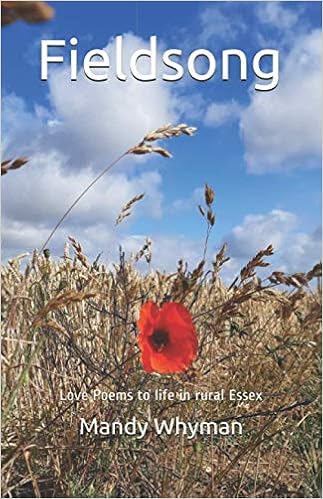
PS: I have written poetry since I was about 7 (much to the hilarity of my family, as I recall). My love of the Essex countryside has now spilled over into a collection of poetry:

www.amazon.co.uk/Fieldsong-Love-Poems-rural-Essex/


Friday, June 26, 2020

Emerging....we think.

April became May, became June and little feels changed. Our absurdly good weather continues as Mother Nature thumbs her nose at us mere mortals and the less clever out there flock to crowded beaches and share sweat, amongst other things.

Lockdown has been a test for us all.

At first, I viewed the uninterrupted timespan as an opportunity to do, well, EVERYTHING! But there is an absurdity in having loads of time. Tomorrow is free - and the day after, so it is hard to find direction. Suffice to say that I have done very little on the EVERYTHING list.

One of the things I have done is to slave away at the veggie garden. Early results were positive as my greenhouse filled up with sprouting kale, tomatoes, cucumber, spinach, courgette, beans and even butternut. It was all looking bumper-crop out there for a minute. 

Then I planted my seedlings out.

When I first attempted spinach in my new garden, my neighbour told me, with great confidence, that `nothing eats spinach.' And that was true - that year and the two years that followed. This year however, something definitely eats spinach! Eight spinach plants were reduced to nothing in the space of a single night.

Something also definitely eats courgette and cucumber plants. Bizarrely, `something' has left the beans, corn and the mangetout (a usual delicacy)alone, but has chomped its way through every cucumber plant with great gusto - and a little bit of cruelty. Typically, the leaves disappear on the first night, then the stalk is despatched on night two.

In a fit of eco-gardening pique, I rushed out to the local garden centre as soon as it opened and purchased a dozen marigolds. Somewhere, in the back of my mind, I remembered that marigolds, planted as companion plants, can dissuade pests. I planted marigolds strategically between my crops and, fairly confident, shut the gate on the veggie patch.
You've probably guessed it: in the morning every single marigold was well and truly chomped - except for the flowers. They stood like forlorn little twigs, marking the spaces where the courgette and cucumber should have been. I imagined the `something' watching my astonishment and and grinning broadly.  So I gave up. Sort of.

I'm pleased to say that I devised a sneak attack and now have TWO (yes, two!) cucumber plants and Two (yes! TWO!) courgettes that are big enough to dissuade the `something'. The cucumber plants are the result of trial and error and sacrifice. I cultivated them in the greenhouse and then cautiously planted them out - one at a time. They were like the sacrificial goat. I kept trying different barriers, but nothing stopped their demise. I was left with two plants that grew big and strong. The one was planted in a secret location, far from where the `something' is known to roam. And its doing just fine. The second almost became a permanent greenhouse fixture, but I often forget to water greenhouse plants, so the decision was made to plant it out. I constructed a very elaborate cage with enviro-mesh and the cucumber plant was transferred to the veggie patch. Success!

The courgette story is a lot less involved: a friend has managed, without greenhouse or veggie patch, to grow an astonishing number of vegetables in pots. She gave me two courgette plants which are big enough to stave off the attentions of the `something'. Taa-daa! I think the `something' and I are just about even.

On another note (pun intended), the garden is fit to bursting with birds. Lockdown has obviously benefitted our feathered friends and my garden is far more fluttery and noisy than I ever remember it being. This year, for the first time, I have encountered a chaffinch close up. I have seen them before when out walking, but don't have much knowledge about this fiesty little bird.

 http://www.publicdomainfiles.com/
The introduction was a bit brutal. Following the sounds of repetitive `thunks', I found a little bird fiercely attacking his reflection in my car wing-mirror. I chased him off and covered the mirror, whereupon he switched sides. So I had to cover up both mirrors. Undaunted, this territorially charged little bird then took on the lounge windows, the sliding doors and had a go at the conservatory. I spent a lot of time over two days shoo-ing off a crazed chaffinch and eventually thought I had won. Only to wake up on day three to a battering of the upstairs windows! I confess that I snuck up on him then and yelled `boo!'. He paused and observed me closely before flying off - perhaps checking that I wasn't that pesky chaffinch he'd been after for three days! I haven't seen him since, so can only assume that he has moved his territory to somewhere with fewer reflective surfaces.

My sister sent me a helpful article about how to discourage birds from pecking at windows. Apparently the proper way of deterring them is to stick bits of flapping plastic to reflective surfaces - thereby scaring them off.  Interestingly, the same article mentioned that wild turkeys in the United States attack their reflections in car bodywork.(If this is a problem where you are, the advice is to not wash your car.) All I can say is that I'm really pleased to be dealing with a chaffinch - I'm not so sure if a wild turkey would respond to `boo!'

And just because I have this lovely photo: did you know that leeks, if allowed to go to seed, produce the most beautiful flowers? Leeks take forever to grow and my efforts were gritty and unpleasant - so I left them alone. Leek flowers make the most gorgeous long-lasting cut flowers - even if they smell a little oniony. Happy sunshine, everyone!

I'm Baaa-ck!

 The move is complete and after almost two months in the sedate surroundings of a Shropshire town, I am beginning to feel a little settled. ...