Saturday, August 29, 2020

Time, time, time...

 And again, the months seemed to have rolled by in a blink. I can't believe that it is June since I last updated this blog. (Note to self: must do better!)

Now the end of August and the cold and blustery bank holiday weekend smells of Autumn. `Not yet!' I want to call out as I pin my hopes on a September Indian Summer. 


It's been a weird ole' year. Not only because of the global pandemic (although that tops the list), but also because the weather has been so topsy-turvy. An early, warm April Spring has thrown out the natural growing seasons and I found myself harvesting sloes for sloe gin last weekend - an activity usually reserved for October and November. As an aside, for those of you who fancy having a go at making sloe gin, it is the easiest thing in the world. All you need is a large kilner jar, a litre of gin (Aldi gin is good and cheap), roughly three cups of sloes and a cup of brown sugar. Wash the sloes (some people prick them, I like to roll them a bit to soften them), pop them in the jar. Add sugar and gin. Gently shake the jar every week or so until the sugar is dissolved and just leave to infuse for the next six months or so. I am sure there are more refined recipes out there, but this recipe works well for me and has provided many a  comforting tipple on a cold winter night (or spring night, or summer evening....). Last year, I had a go at making crab apple gin too. I have a wonderful little crab apple tree that is a joy for its blossom and cherry sized deep red fruit. Following the same recipe as the sloe gin, the crab apple gin, enjoyed during the early days of lockdown, proved delicious, although maybe not as appley as hoped. Which means that I am forced to experiment a little more... ah well, someone's got to do it.


But I digress. The strange roll of seasons has had serious agricultural implications. Wheat farmers report the worst crop in many years and the cost of flour is set to climb. Crops which have formed the mainstay of our food supply will have to be re-thought as climate change continues and we are going to have to find alternatives to products we have long thought of as staples. Either our crops are going to have to be adapted to shorter, hotter summers, capable of withstanding the odd deluge or our diets in 50 years time might look very different to what they are today.

Wheat aside, this year has seen my veggie patch flourish. After an initial battle with a strange pestilence which ate anything leafy and tender, I have managed to grow cucumbers quite successfully - my first ever! The tomatoes, after an initial struggle, are doing well and I have corn on the cob for the first time in three years. My little apple tree has, as always, been nothing short of miraculous in its production of apples and, because the wasps were out late, I was actually able to keep the fruit on the tree this year. My freezer is now full of stewed apple and I still have a healthy stock in the fridge. The butternut plants, grown randomly from a supermarket butternut, are triffiding away with great gusto. They have lots of flowers, but it remains to be seen whether they will manage any fruit. So the strange summer of 2020 has yielded, after all.

I have to say that this summer, maybe more than any summer before, I have loved living where I do. The footpaths and the fields, my garden, the growing that I have been so lucky to witness - these things have grounded me in a world gone mad. We are surrounded by small miracles all the time - the sprouting of seeds, the bumblebees that gather like beads on the lavender, the sparrows that squabble on the fence - small things that we don't always stop to notice. It is indeed a wonderful world.

Keep safe, all. 

PS: I have written poetry since I was about 7 (much to the hilarity of my family, as I recall). My love of the Essex countryside has now spilled over into a collection of poetry:
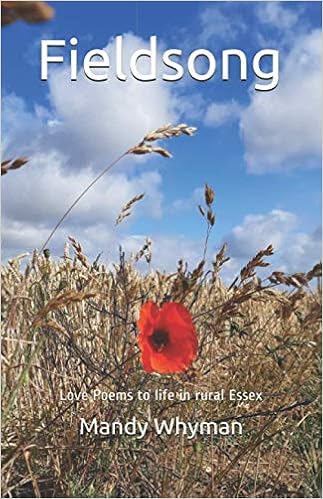
www.amazon.co.uk/Fieldsong-Love-Poems-rural-Essex/


Friday, June 26, 2020

Emerging....we think.

April became May, became June and little feels changed. Our absurdly good weather continues as Mother Nature thumbs her nose at us mere mortals and the less clever out there flock to crowded beaches and share sweat, amongst other things.

Lockdown has been a test for us all.

At first, I viewed the uninterrupted timespan as an opportunity to do, well, EVERYTHING! But there is an absurdity in having loads of time. Tomorrow is free - and the day after, so it is hard to find direction. Suffice to say that I have done very little on the EVERYTHING list.

One of the things I have done is to slave away at the veggie garden. Early results were positive as my greenhouse filled up with sprouting kale, tomatoes, cucumber, spinach, courgette, beans and even butternut. It was all looking bumper-crop out there for a minute. 

Then I planted my seedlings out.

When I first attempted spinach in my new garden, my neighbour told me, with great confidence, that `nothing eats spinach.' And that was true - that year and the two years that followed. This year however, something definitely eats spinach! Eight spinach plants were reduced to nothing in the space of a single night.

Something also definitely eats courgette and cucumber plants. Bizarrely, `something' has left the beans, corn and the mangetout (a usual delicacy)alone, but has chomped its way through every cucumber plant with great gusto - and a little bit of cruelty. Typically, the leaves disappear on the first night, then the stalk is despatched on night two.

In a fit of eco-gardening pique, I rushed out to the local garden centre as soon as it opened and purchased a dozen marigolds. Somewhere, in the back of my mind, I remembered that marigolds, planted as companion plants, can dissuade pests. I planted marigolds strategically between my crops and, fairly confident, shut the gate on the veggie patch.
You've probably guessed it: in the morning every single marigold was well and truly chomped - except for the flowers. They stood like forlorn little twigs, marking the spaces where the courgette and cucumber should have been. I imagined the `something' watching my astonishment and and grinning broadly.  So I gave up. Sort of.

I'm pleased to say that I devised a sneak attack and now have TWO (yes, two!) cucumber plants and Two (yes! TWO!) courgettes that are big enough to dissuade the `something'. The cucumber plants are the result of trial and error and sacrifice. I cultivated them in the greenhouse and then cautiously planted them out - one at a time. They were like the sacrificial goat. I kept trying different barriers, but nothing stopped their demise. I was left with two plants that grew big and strong. The one was planted in a secret location, far from where the `something' is known to roam. And its doing just fine. The second almost became a permanent greenhouse fixture, but I often forget to water greenhouse plants, so the decision was made to plant it out. I constructed a very elaborate cage with enviro-mesh and the cucumber plant was transferred to the veggie patch. Success!

The courgette story is a lot less involved: a friend has managed, without greenhouse or veggie patch, to grow an astonishing number of vegetables in pots. She gave me two courgette plants which are big enough to stave off the attentions of the `something'. Taa-daa! I think the `something' and I are just about even.

On another note (pun intended), the garden is fit to bursting with birds. Lockdown has obviously benefitted our feathered friends and my garden is far more fluttery and noisy than I ever remember it being. This year, for the first time, I have encountered a chaffinch close up. I have seen them before when out walking, but don't have much knowledge about this fiesty little bird.

 http://www.publicdomainfiles.com/
The introduction was a bit brutal. Following the sounds of repetitive `thunks', I found a little bird fiercely attacking his reflection in my car wing-mirror. I chased him off and covered the mirror, whereupon he switched sides. So I had to cover up both mirrors. Undaunted, this territorially charged little bird then took on the lounge windows, the sliding doors and had a go at the conservatory. I spent a lot of time over two days shoo-ing off a crazed chaffinch and eventually thought I had won. Only to wake up on day three to a battering of the upstairs windows! I confess that I snuck up on him then and yelled `boo!'. He paused and observed me closely before flying off - perhaps checking that I wasn't that pesky chaffinch he'd been after for three days! I haven't seen him since, so can only assume that he has moved his territory to somewhere with fewer reflective surfaces.

My sister sent me a helpful article about how to discourage birds from pecking at windows. Apparently the proper way of deterring them is to stick bits of flapping plastic to reflective surfaces - thereby scaring them off.  Interestingly, the same article mentioned that wild turkeys in the United States attack their reflections in car bodywork.(If this is a problem where you are, the advice is to not wash your car.) All I can say is that I'm really pleased to be dealing with a chaffinch - I'm not so sure if a wild turkey would respond to `boo!'

And just because I have this lovely photo: did you know that leeks, if allowed to go to seed, produce the most beautiful flowers? Leeks take forever to grow and my efforts were gritty and unpleasant - so I left them alone. Leek flowers make the most gorgeous long-lasting cut flowers - even if they smell a little oniony. Happy sunshine, everyone!

Tuesday, April 21, 2020

Flowers, foraging and other fumbles

As we enter week 5 of lockdown (or is it 4? Or maybe 3...who knows!) all sense of modern society seems to be slipping quietly into the background. Nature, however, doesn't pay even the vaguest attention to the ways of Man and the lack of cars, noise and pollution seem to have given Spring an extra boost as it bursts out in every garden and every side-walk.

Here, in our rural-ish corner of Essex, everything is in blossom and my garden is an unmitigated delight. In the last week, the apple tree, the crab apple tree (more about this wonderful tree another time) and the flowering cherry have put on the most glorious show. A visual re-affirmation that this too will pass and the seasons will continue to turn.

The birds are equally delighted by the coming of the warmer weather and a pair of blue tits are settling into the nesting box outside the kitchen window. It remains to be seen whether they manage to raise a family. In past years, the sparrows (those very cute thugs of the bird world) have harassed them mercilessly and forced them out, so fingers crossed..
But its not all blossom and birds. I continue the relentless task of digging the garden that is getting drier and harder with each day. The weather has been beautiful - but lack of rain also means lots of water carrying (our house has a single outdoor tap situated just outside the kitchen. Needless to say, most of the stuff that needs watering is quite far away...)

The lockdown, which has transformed visits to the supermarket into SAS-type operations of swoop and gather, has meant that not everything is as readily available as before.  During the last week or so, this has meant some experimenting in the search for alternatives. The first was an attempt to make yoghurt. As an individual, I consume quite a lot of natural yoghurt (which could explain why the jeans don't get any looser - but that's another story), but as a family, it wasn't a priority on the supermarket swoop, so was forgotten. Some days into the yoghurt dilemma, I remembered my grandfather used to make emergency yoghurt by adding lemon juice to whole milk. It works - in a manner. The lemon juice curdles and thickens the milk. It doesn't look much like yoghurt, but it tastes quite yoghurty , with a lemon aftertaste which is fairly pleasant. However, this method needs lemons, which can be difficult to source because of reasons above, so I attempted to stretch the yoghurt I did have - with some success Essentially, this method requires some live yoghurt (natural yoghurt, full-fat is best) and a couple of pints of milk. The milk is heated and added to the yoghurt starter. The resulting mixture then needs to be left in a warm spot for about 8 hours. I used these instructions from farmdrop, which were the most straight-forward: 
https://www.farmdrop.com/blog/make-yoghurt-scratch-5-easy-steps/
I was a little impatient, so my yoghurt wasn't as thick as it might have been, but it certainly tasted right and did the job!

A less successful experiment was the making of nettle pesto. I have been reliably informed by all sorts of blogs and a knowledgeable teacher friend, that nettle pesto is easy to make and good to eat. So, pesto being yet another luxury to fall off the shopping list, the Child and I spent our daily walk collecting nettles ( I can see your faces from here - we went out into the fields to try to avoid the dog-pee'd versions!)

With a sizeable haul in hand, we returned home to separate leaves from stems and then blanched the nettles. So far, so good. The issue was, I think, in the execution. I didn't have pine-nuts and I didn't have a specific recipe. I was also advised to clobber the mixture with a pestle and mortar, but I don't have one of those.....So I threw in a clove of garlic, some cheese, some salt and sunflower seeds and blitzed it all with my stick blender.


The result was pesto-ish, mostly in the fact that it was green. Not unpleasant, but not good enough to try again. However, nettles are very good for you...so maybe next year. With pine-nuts and a pestle and mortar.

More successful was the fridge substitute for Skipper's dentistix - a carrot. My sister has used this root vegetable as a tooth cleaner for her dogs in the past and, although initially a little bemused at the changed face of his morning treat, Skipper tucked into the carrots quite happily.

So there you go... As the South Africans say: n boer maak n plan (a farmer makes a plan). There are always options out there - although maybe not nettle pesto!

Stay safe!


Friday, April 10, 2020

Growing!

There is a certain cruelty to the UK weather turning wonderful as we slip from our third week of Covid-19 lockdown into a period of indefinite confinement. I am among the fortunate who have outdoor space and I am counting my blessing as the weeks blur into each other. Not least because I have my garden and the unexpected lack of formal work has meant that I am able to devote more time to it than in previous years. So I have been growing!

I was partly prepared in that I bought seeds and compost before lockdown - which was fortunate for me as, if you've looked, you'll know that you currently can't find a growbag for love or money! But if you haven't bought seeds, all is not lost. One of the most exciting successes I have had this month is that I threw some butternut seeds (from the butternut we ate) into a pot and just about all of them have germinated! As a seasoned optimist, it wasn't the result I was expecting at all and my bemused family have been dragged, one by one, into the greenhouse, to observe these miraculous sproutings.

Before the miracle of the butternut, I have to admit to playing it safe. Leafy greens are easy (I can grow them - so I know). I have successfully grown some kale and rocket and have planted them out into my veggie patch. Kale, I believe, likes it best cool, so the success of this crop remains to be seen.

Spinach (another fool-proof crop) and beans are currently growing in what remains of my single growbag. Having proved a failure at staking anything successfully, I have gone for dwarf beans. These should be easy to manage and the ones I have grown before have yielded really well.

Otherwise, I have courgette growing (they are pretty hardy - so another one to go for if you are not very good at this cultivating lark) and cucumber too. I actually have managed to sprout some tomatoes, a crop I have found really difficult to seed in the UK. This was a bit of a shock as I always thought tomatoes were easy. When we lived in Messina, in the far North of South Africa, I would sow tomatoes straight into beds and they were great! But no such luck here where temperatures fluctuate and tomatoes are tetchy. Top advice for tomatoes: cheat! Buy well-established seedlings or get someone more green-fingered to get them going for you. My friend, Margaret supplied me with tomato seedlings last year and I had a bumper crop. More credit to Margaret than me - but the tomatoes were worth the lack of growing pride! Actually, another good tip from Margaret  is to sow seeds in toilet roll inners. This means that there is minimal disturbance to the roots as you plant them out - a time where I frequently maul my seedlings to the point of no return. A couple of toilet rolls can be put in one pot. They are also quite easy to monitor, because you can see how wet the cardboard is.

Project wise, I am also attempting to grow a sweet potato. Having previously been told that Sweet potatoes won't grow in the UK, I stumbled across a you tube video that informed me that I could. So the sweet potato project is in progress. This video is below:
https://www.youtube.com/watch?v=yDc6R-nfwcM

The good news for those with small gardens is that, apparently, sweet potatoes will happily grow in a large tub ( a rubble tub will do) and that apparently they produce copious vines with very pretty flowers. All of this remains to be seen - as my potato is still sitting in water waiting to do - well - anything...

Although I have a garden, my space is limited and so I have tried to be creative with creating growing opportunities. One idea I have come up with is to convert 5-litre containers into hanging pots. This is an ecover washing liquid bottle, well-washed out and with the middle section cut out, leaving the handle as a hanging opportunity. I have two of these, sewn with rocket, and will give one to my flat-inhabiting daughter just as soon as lockdown is over.
           

I know that I am unbelievably fortunate to have a garden at this unusual time, but having something grow and flourish reaffirms the stubbornness of nature and life. However small your home, I hope that you also have the chance to watch something grow as the weather warms and we learn to deal with our new reality.

Stay safe, everyone!

Wednesday, February 27, 2019

Going Green

2018 was definitely the year when The People decided to take action against what is happening to our world. There was a whole-sale rebellion against plastic straws; single use plastic and palm oil were in the news, with all sorts of people vowing to stop, stop, stop... smell the roses, observe the deer at dawn and just appreciate what we have.


But the momentum seems to have slowed since then. Iceland (the supermarket, not the country), which bravely declared that it was going palm oil free in its products, has been slated by some of the press because products with palm oil are still found on its shelves. The CEO's argument that it was existing stock was seen as a sort of skulduggery in a press that can only be described as designed to discredit Iceland's efforts. Don't get me wrong, I understand completely that Iceland's move has an economic motivation as well as environmental, but it seems to me that we, as a society, are quite happy to shoot down any action that questions the status quo.

Take the recent children's environment protests. `What good can it do?' was a comment I most frequently heard. Well, surely the point is that people are taking action. Children are stepping up and effectively saying `not in my name'. Which is a good starting point, but we need to keep following through. As adults, we need to put our money where our mouths are and not blindly buy into products and movements which we know are going to harm us. Will we be able to magically change everything? No. But maybe we can change some things and gradually the change in thought will change the world. We know this - we have seen it before, throughout our history.

Any-way, my own efforts are predictably scrappy, but I do try to make conscious decisions about what I use and how `green' I am. I recycle with a psychotic zeal, regularly berating my family on throwing away items that are recyclable. (And yes, I can hear the nay-sayers saying that it all ends up in a dump any-way, but I have to TRY) and I conserve where I can in terms of resources and growing my own.(The latter with, admittedly, limited success).

Cleaning products are a bug-bear (don't get me started on bathroom products - those are a nightmare!) Despite the impressions I might give to my nearest and dearest, I do, in fact , appreciate a clean-ish house. My sister went through a phase where she only used vinegar and lemon juice to clean. A really good approach, but not suitable to all surfaces and the smell of vinegar doesn't appeal to everyone!

I have tried to winnow down the items I keep at home, the idea being that I have a clearer idea of what chemicals I am using and am retaining some sort of greenish control. Where possible, I try to use products that are touted as eco-friendly. In my kitchen and laundry, I use Ecover products. This Belgian company has a long list of environmental credentials and their dishwashing liquid comes in a bottle made from 100% recycled plastic - a big plus. I do, however, have an axe to grind with Ecover in terms of refills. You can buy most of their products in bulk and I have looked into buying their laundry detergent in bulk (secretly hoarding loads of detergent bottles to facilitate this) only to find that the unit cost of bulk buying is too close to the unit cost of smaller buying to make it worth while! In fact, I went to a `green' store in Bishops Stortford to refill my Ecover laundry liquid to find that I paid more for a refill than I would for a new bottle of detergent! How does that make any sense? Needless to say, Ecover, I think some work is necessary....


My hero product at the moment is Waitrose ECO-logical multi-purpose cleaner. I use it to clean everything, including the carpet that my old dog has the odd accident on. Really like this one!

But if we are to go really, really green, I have to mention olive oil (although I suppose any natural oil would do). After an unfortunate accident involving nail polish remover on our wooden table, I accidentally discovered what a great wood polish olive oil is. Applied liberally, left to sink in and then buffed a bit later to take off any residue - it is brilliant! And then I discovered that it works well on leather too. Our leather sofa is looking a little worse for wear with dogs, child and sun. A quick once-over with olive oil seems to do the trick and moisturise the leather. Very impressive!

None of which makes me a Martha Stewart dressed in flax - but I like to think that I making conscious decisions about the sort of world I live in and want to leave to my children.

I'd really like to hear your views and secret green hacks. We live in a wonderful world, lets keep working at it!


Wednesday, February 6, 2019

It's gorgeous out there!

I love where I live. Although not as deep in the countryside as I might dream of, my rural-ish existence means that I am surrounded by fields and trees and wake up to birdsong. (Ok - and some traffic noise...)

This morning, a mild and still morning following a night's rain, was the sort of morning I felt I could walk for ever. Of course, I couldn't, obligations and a old and cranky dog being the most pertinent reasons, but I felt I could. And I reflected on how very lucky we are in the UK to have such access to green space. You have to have lived elsewhere in the world to really appreciate a public footpath and an open playing field. How very, very lucky! There are many countries with far more space than our little island, but their land is almost universally privately owned and jealously fenced in. Our right to roam seems an essential part of our civil liberties and one that is incredibly dear to my heart.


Which is why fly-tipping and public littering make absolutely no sense to me. Of the first, why would someone EVER feel it was okay to drive along a beautiful country lane and dump their detritus? What on earth is going through their heads when they decide to spoil an area? Are they thinking `not in our backyard?' Well, I have news for the fly-tippers: it IS your back yard. Our rights of access make every little bit of this gorgeous country your back yard - and mine. And frankly, I am becoming a little pissed off at the regularity of fly-tipping down the lanes I walk. Not only does this habit create an eyesore and unnecessary cost for councils, but it shows an appalling lack of self-respect. Yup - that's what it boils down to: a complete lack of self-respect in that you are showing how little morality and responsibility you possess. And those that pay for dodgy clearances are just as much to blame. Legitimate waste collectors are listed on council websites. If they are not - contact your council. It's that easy. Don't think that your waste is going to be properly disposed of just because the man in the van said it would be. Insist on seeing records from the municipal waste sites. Take some responsibility! Because, of course, the bad news is that councils will sift through the fly-tipped waste and inevitably find some scrap that will bring them to your door - and you will be liable.

And as for those who throw their waste out of car windows...I would bet that the vast majority of those who chuck their McDonalds wrappers out of their vehicles tut-tut in sympathy when watching Blue Planet. As if plastic waste is something that comes from somewhere else.  What on Earth do you think will happen to your Big Mac box or your Costa coffee cup when you fling it out so that your car stays clean? Do you really think it is going to biodegrade? Or do you just not care? Because it isn't on your home turf? Pathetic! When I was growing up in South Africa, we had a slogan that caught on with children. It was `litter-bug, litter-bug, shame on YOU!' And shame on you! This beautiful country, where we all own so much of the breathing space deserves a whole lot more respect. Take your litter home. It isn't rocket science.

I can't say it enough: this country is beautiful. And even though I am its adopted child, I love its lanes, its trees, its fields, its public paths, its vast public parks, its dips, twists, mud, grit and ancient resilience with every bit of me. And it is not just mine. It is ours. And because it is ours, we need to look after it. Every one of us.

Go out. Have a walk. Listen to the birds. Look for the signs of Spring in the snowdrops and black hawthorn and beginning buds. Remember how lucky you are.


Sunday, January 13, 2019

New Tree!

The skies are still grey and we've hit that bit of Winter when nothing seems to change and the possibility of Spring seems about as remote as sprouting wings. I keep making `I'm going outside' noises, but the cold and damp have got the better of me. I am happy to walk the dogs, but then equally happy to consider how I might mow the lawn/weed the beds/ cut the hedges, from inside- and tomorrow.

I have, however, in a rare show of industry, replaced my dead cherry tree with a rowan tree (otherwise known as a mountain ash). Trees in gardens are not everyone's cup of tea. Grandad Whyman's great pronouncement on trees was that `Ah don' raat laak ah tree in me garrden'. (read strong Yorkshire accent) But then grandad Whyman had a postage stamp in a mining village and was far better at growing vegetables than I am. I rather like a tree in a garden. And I am now fortunate enough to have enough garden to have several trees.

Any-way, back to my lovely rowan tree. My  Sorbus Commixta Embley. I have a couple of reasons for choosing this tree, despite the sceptical looks from my knowledgeable neighbour and some muttering about the mess it will make. Firstly, the flowers and berries are supposed to be very bee and bird friendly. Tick. It is rumoured to be well-behaved and generally hardy. Tick. And then there's the idea that it is a British tree that has long been mentioned in folklore - so it has brevity. Tick. And it wards off evil spirits....Yes. The last of these reasons might seem a little out there, but I live in the country(ish) now. With no street lights and across from some deep (ish), dark woods. On a dark night, when the wind is gusting and a fox is calling in the dark mass of trees just a field away from me, it is easy to think that something scary is about. And if a tree fixes it - well, I will say no more.

And I suspect that I am not alone. Out where I live there are numerous horse-shoes nailed to walls and above doors. Yes, it is horsey country, but there are an awful number of shoes on walls. Holly plants also seem to  feature heavily and my own established hedges are holly-heavy. While I was looking for my replacement tree, I discovered that holly is a traditional hedge plant not only because it forms a good strong barrier, but apparently because it also keeps witches away. They cannot run across the top of holly hedges as they might on those of more accommodating plants.. Holly trees themselves are rumoured to be powerful magic. They ward off evil and, according to several websites, lightning. They also make good wands. But holly trees drop really prickly leaves and make walking outside in bare feet  intolerable - so I settled on a Rowan tree.

Buying a tree in Winter is actually a good move. They are sold as bare rootstock and you essentially get more tree for your money. From what I understand, planting the tree while it is dormant also gives it a better chance of establishing itself before the growing season of Spring arrives. Or so the theory goes - watch this space! This is the second tree I have bought on the internet from primrose.co.uk. The trees arrived well-packaged, delivered via courier within a day or two of ordering. When I first moved in, I bought a flowering cherry and two blueberry bushes from Primrose. All have established well. So a sneaky little recommendation there.

So that was my early January project. I am now waiting for my rowan tree to grow and produce lots of lovely berries, which, according to the website treesforlife.org.uk I can make into a jelly or, dare I say it, a strong alcoholic drink. Hmmm. Roll on Spring!


I'm Baaa-ck!

 The move is complete and after almost two months in the sedate surroundings of a Shropshire town, I am beginning to feel a little settled. ...